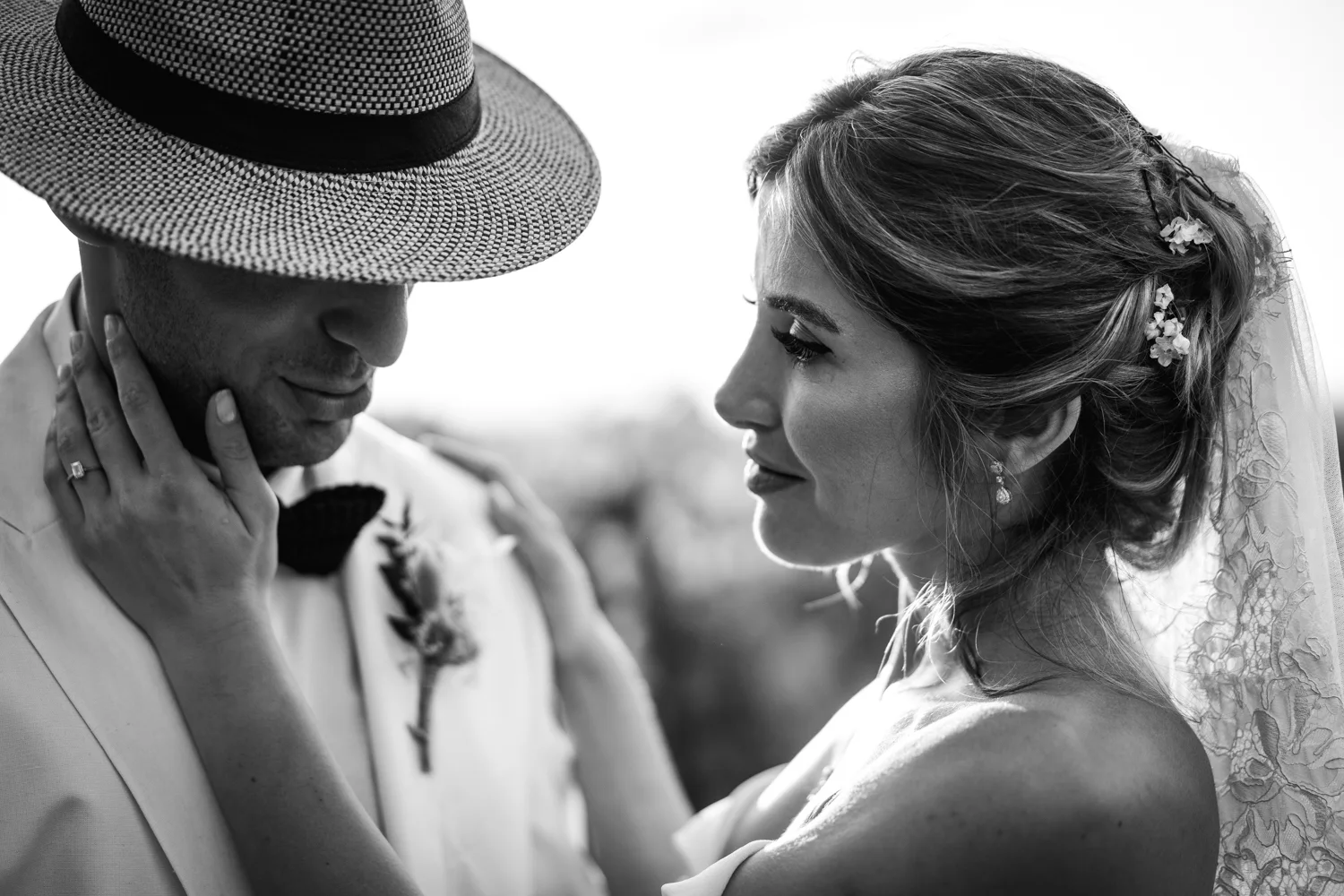
There is a phrase that often emerges during my first conversations with couples. A simple, almost timid statement, yet one that carries significant weight: "We don't know how to pose!"
I always reply with a smile. And then, I tell them a story.
The Mask of Posing
I have been a photographer for thirteen years. In all this time, I’ve learned one fundamental truth—not in a classroom or from books, but out in the field, among people, immersed in their real stories: posing is a mask. And I have never been one to love masks.
It is not a matter of aesthetics. Visually, I actually enjoy looking at that genre of photography. It is something much deeper, something visceral. When you ask someone to stop, to smile, to "make the face you make when you are happy"—you are asking that person to perform on the most important day of their life. There is a certain melancholy in that, something I simply cannot accept.
Because your wedding day is not a performance. It is life. It is real. It is irreversible.
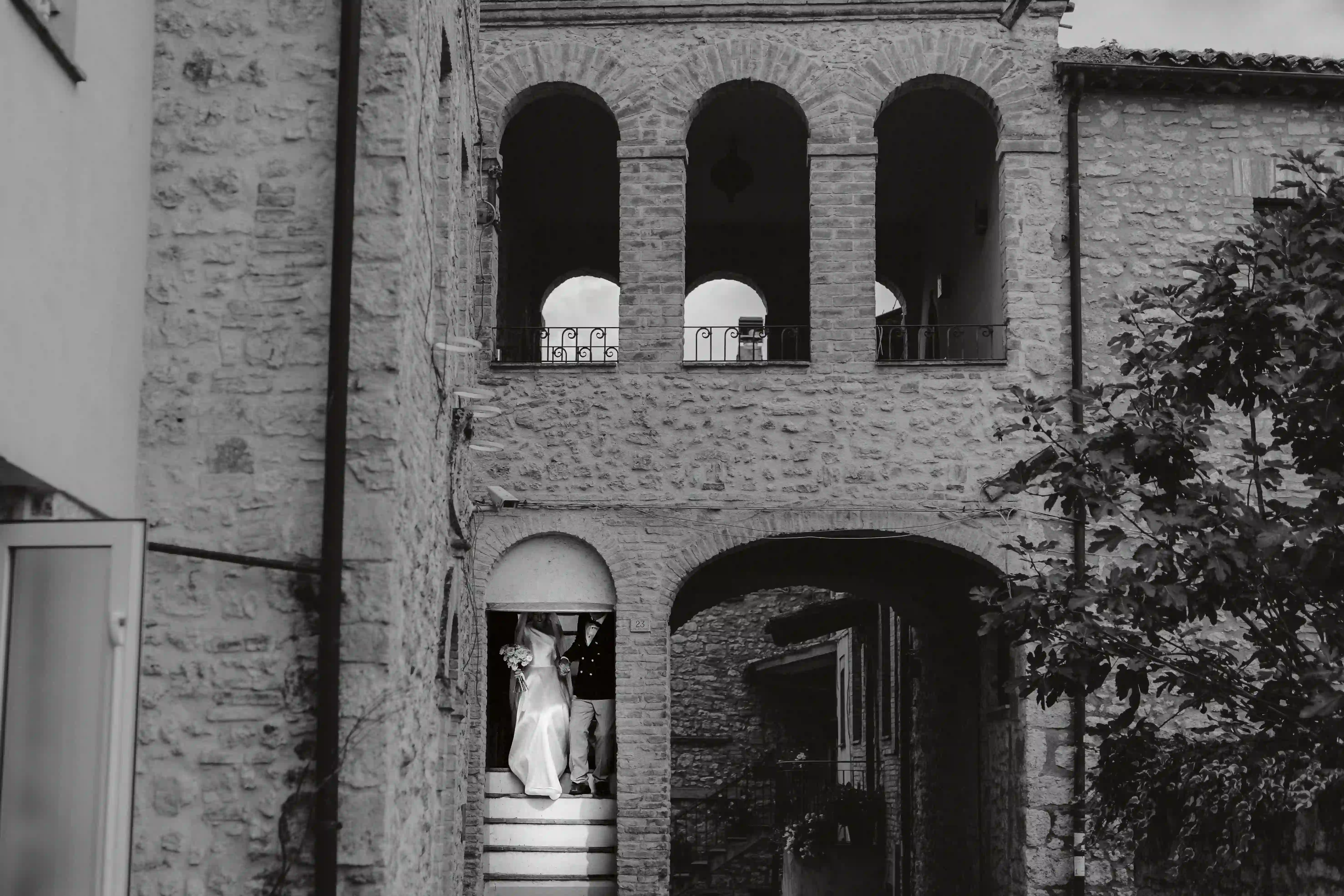
A spontaneous moment that tells a pure emotion, without filters or forced poses.
Reportage and Cinema: Two Souls That Complete Each Other
I learned everything from documentary photography—reportage. That silent, almost monastic discipline where the photographer does not interfere, does not direct, does not orchestrate. You observe. You wait. You breathe in sync with the scene. Reportage teaches you to trust reality, knowing that reality is always far more compelling than anything you could ever stage.
Then came cinema. One of my greatest loves, an all-consuming passion that takes hold when you recognize a language as your own. From cinema, I took light—the ability to transform an ordinary moment into something that carries the gravity of a film scene. I took atmosphere. I took the understanding that a story isn't told in a single image, but in a sequence, a rhythm, a narrative tension that guides the viewer from one point to the next.
Reportage and cinema. Authenticity and aesthetic curation. Two souls that might seem completely opposed, yet, as I discovered, complete each other perfectly.
The Power of Empathy
I am a deeply empathetic person. I say this without hesitation because, for me, it has always been a point of strength rather than a vulnerability. I enter people's days on tiptoe—with respect, with discretion—but I pour everything I have into it.
I feel emotions in the air just as one feels the weather shifting. I see when a bride's eyes are about to well up with tears long before the tears actually fall. I sense the exact moment when two people stop thinking about everyone else and look only at each other.
And that is the moment I raise my lens and shoot.
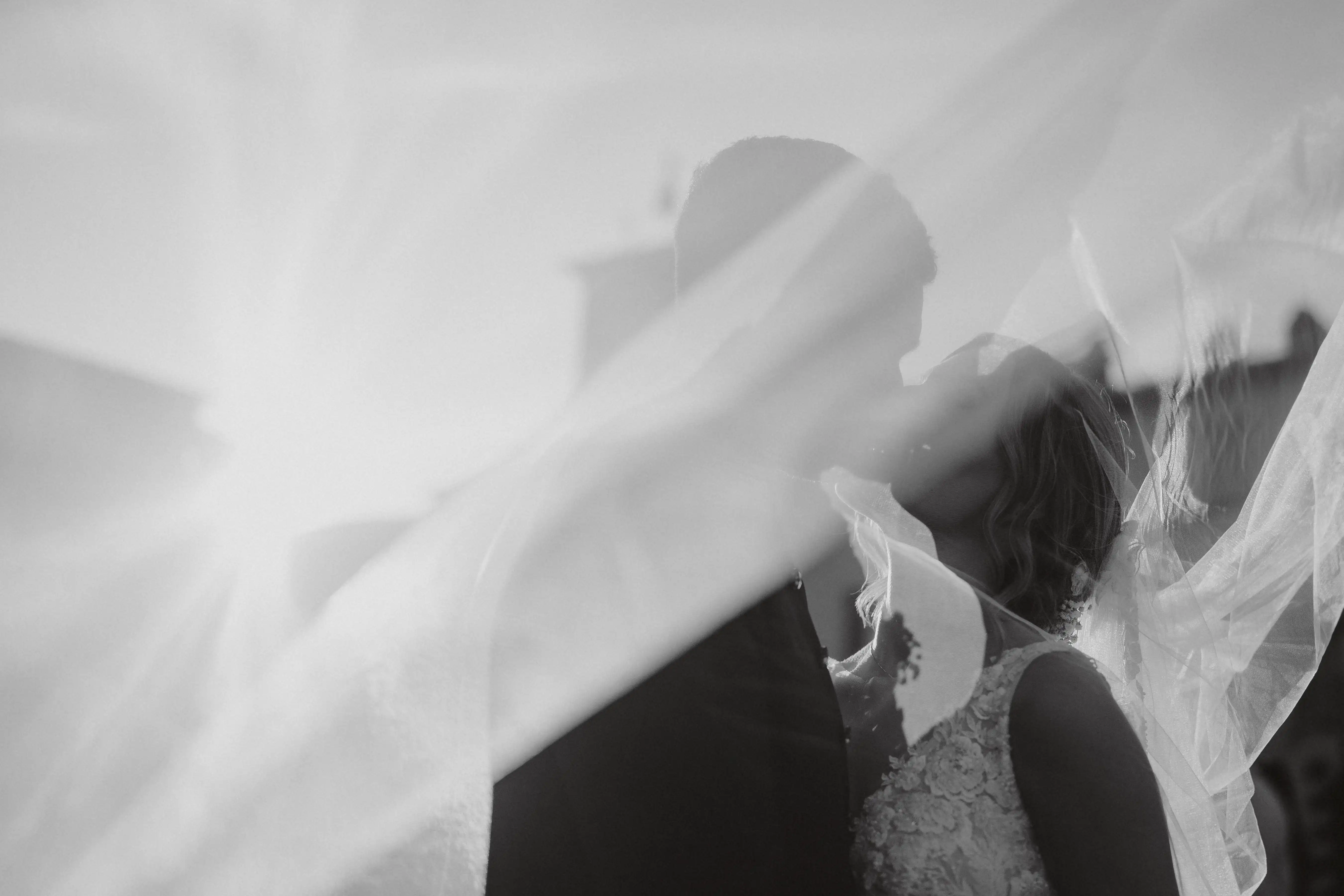
When eyes meet and the rest of the world fades away.
Being empathetic in this line of work might be seen as optional. But it is my way of recognizing myself in what I do and in the stories I tell. Because if you don't step inside the story, if you remain on the outside with your tripod and artificial lights, you might get beautiful photographs—but they will be empty. Photographs where two people look happy instead of actually being happy.
"If your pictures aren't good enough, you aren't close enough."
— Robert Capa
That difference, however subtle it may seem, is visible. It is felt. I know this because I see it every time I show my work to a couple and watch them scroll through the images. There are the photos that make them pause, the ones they stare at in silence as a genuine smile breaks across their faces. Words are not needed to express a feeling.
The Lesson of Authenticity
I am the father of twins, and fatherhood has profoundly changed me in this regard. Anyone with young children knows this: children are the absolute masters of authenticity. They do not know how to fake it. They do not know how to wait. They live every single moment with total immersion, holding nothing back.
I spend hours watching them discover the world for the very first time. The light that shines in their eyes because every new thing they look at is a treasure. I often think we should all try to be a bit more like that—especially on a wedding day.
Having two children has taught me to slow down my gaze. To capture what is happening at the margins of the scene, not just in the center. The gesture of one hand tightly squeezing another under the table. The look of a mother watching her daughter adjust her veil. A groom holding his breath just a second before he turns around.
These are the moments that survive time.
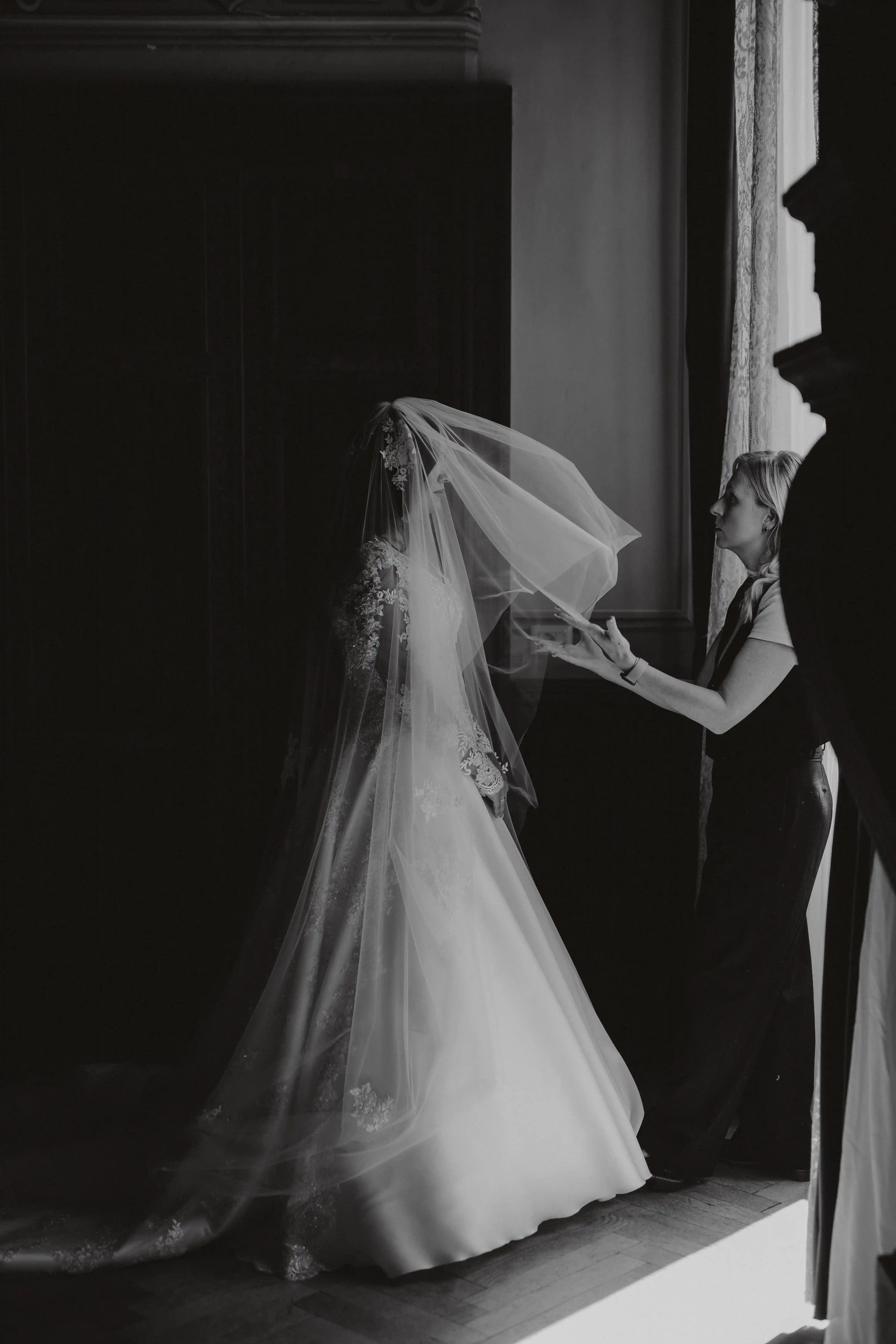
The details at the edges of the scene hold the most powerful emotions.
The Luxury of Not Altering Reality
When I build a body of work, my post-production follows the exact same philosophy. I don't chase special effects. I don't pursue color grading trends as aesthetic shortcuts, nor do I layer filters that transform reality into something it never was. I look for the light. I use contrast as a narrative tool. I want whoever looks at my photography to feel as if they are right there, in that moment—not inside a stylistic preset.
There is a paradox in contemporary photography: in an era where we can alter almost anything in post-production, the true luxury is leaving things exactly as they are. Soft, respectful, and discreet post-production—editing that enhances without distorting—is a radical choice in a market that so often rewards excess.
But I do not work for the market. I work for you. For the people who, twenty years from now, will open those photographs and recognize themselves—not an idealized, unrecognizable version of who they were.
A Secret That Is No Longer a Secret
I also have a secret, which is not really a secret anymore: I am colorblind. For years, I struggled to come to terms with this—with the thought that color, the great language of photography, spoke to me differently than it did to others. I spent countless nights in front of monitors, studying RGB codes and color palettes, building my own sensory map to reach the places my eyes alone could not.
Today, I no longer view it as a limitation. I live it as my unique filter. My signature. Because, in the end, color is not a matter of nomenclature—it is a matter of emotion. And if an image makes you pause, if it makes you feel something deep in your chest, then color has done its job, regardless of what name I give it.
Each of us is perfect in our own imperfection. This belief applies not only to how I see color but to every couple who entrusts me with their story. (I actually wrote a whole article about this "limitation" of mine, which you can read here).
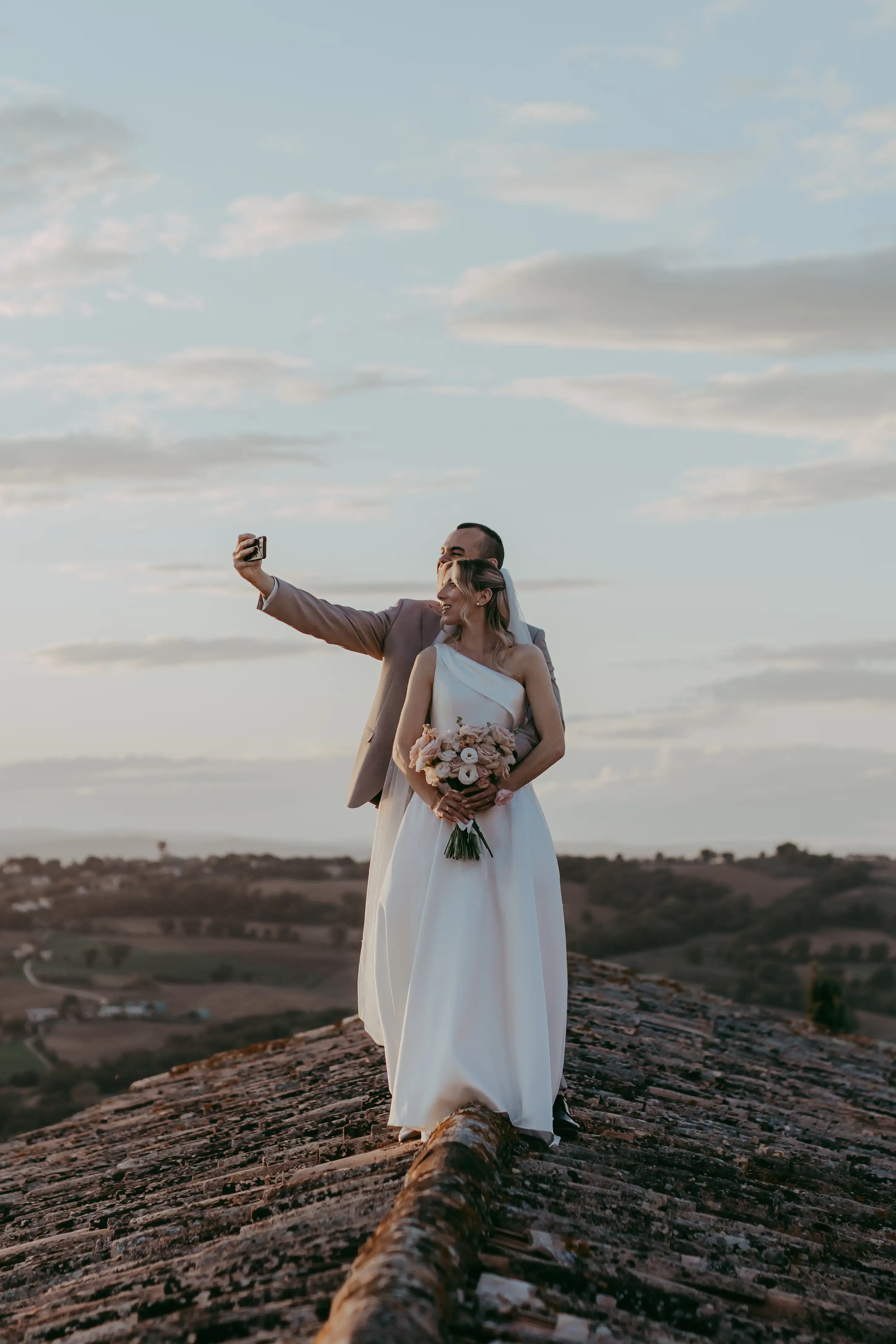
Capturing you for who you truly are, without masks.
A Promise, Not a Service
Entrusting me to document your wedding is an act of faith. I never forget that. I never take it for granted.
Because what I bring to you is not a photography service. It is a promise to document you exactly as you are, to capture how my eyes see you in that specific moment. Without masks. With all the care, technical skill, and empathy I have built over thirteen years of living stories alongside people.
Spontaneous photography is not the lazy route, where the photographer does nothing and just waits for things to happen. It is the hardest route—the one that demands absolute presence, constant focus, and the ability to disappear while always being right there. But it is also the only path that leads to true images. To images that last. My images.
This is the luxury of authenticity. It doesn't cost less. It demands more—from me, and from you, because you must have the courage to let go, to trust, to stop thinking about how you look for just one day, and simply begin to be.
The result, I promise, is worth every single second.
If you feel this is how you want your day to be remembered, write to me. I would love to hear your story.
Check Availability