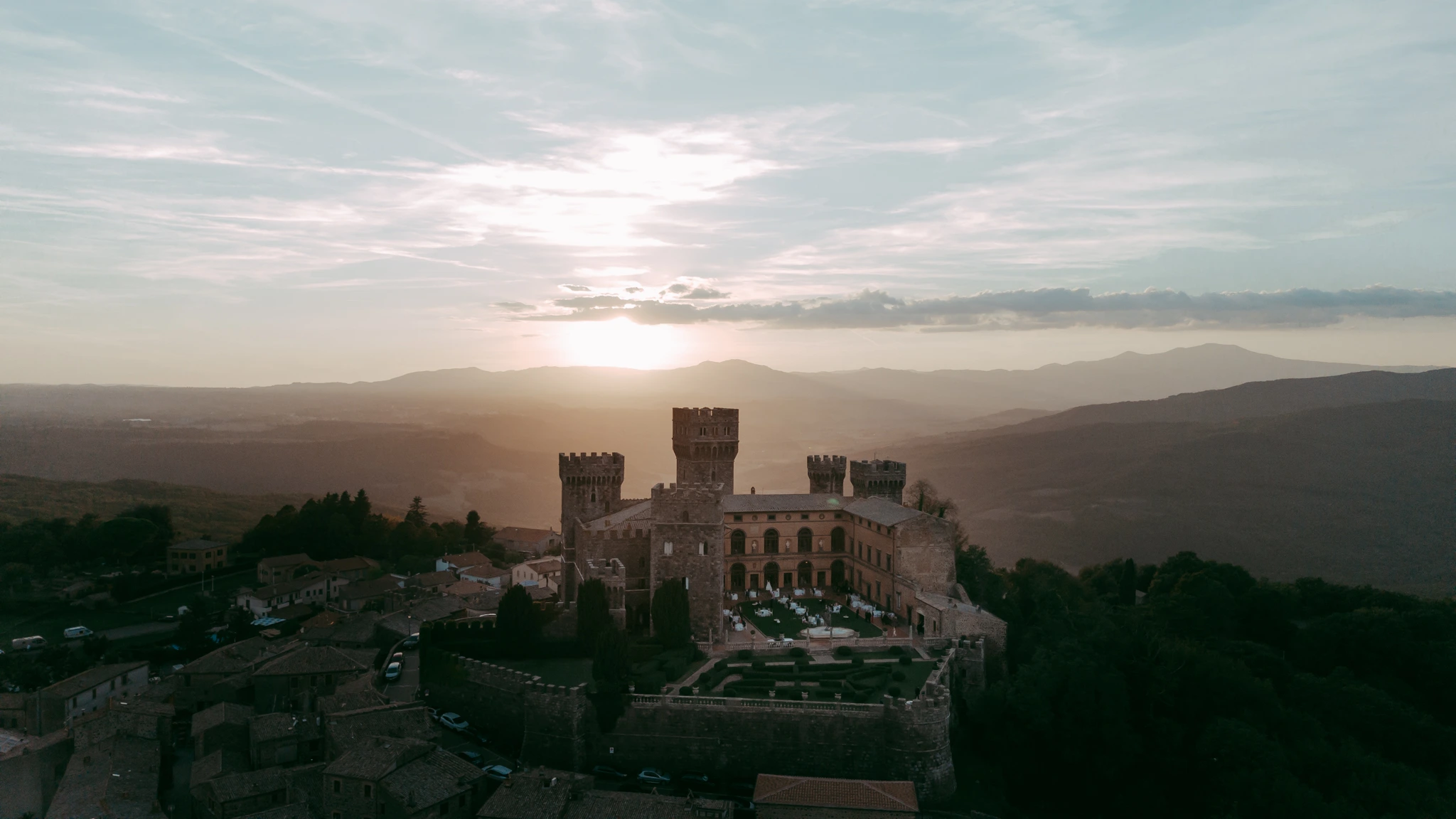
There is a precise moment, every time I arrive at a new venue in Umbria, when I stop and take the time to observe. I don't check the light yet — that comes later. I observe and remain fascinated because this land still has this effect on me, even after thirteen years and hundreds of weddings: it disarms you. The hills overlapping on the horizon, the silence interrupted only by the wind among the cypresses, the ancient stone that seems to breathe.
It's difficult to take "bad photos" in Umbria. But it's even more beautiful to learn to photograph it truly well.
This guide is born from that experience gathered in the field, from years spent moving between Umbrian villas, villages, and farmhouses with a camera in hand and a story to tell. If you are considering Umbria for your wedding, what follows is what I would like to tell you before even talking about logistics or budget.
Why Umbria, today
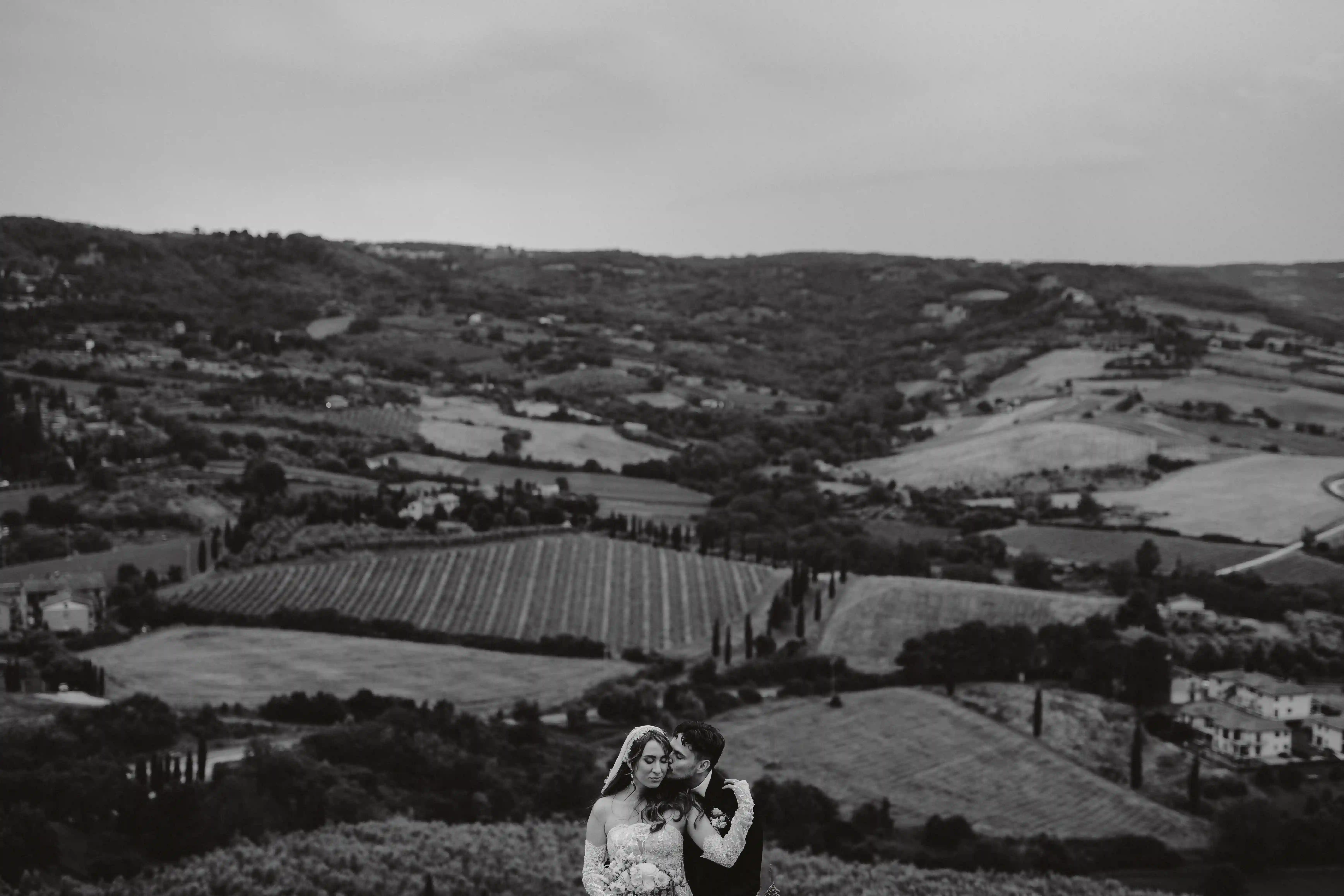
Umbria is no longer a niche secret reserved for a few connoisseurs. In recent years I have seen interest grow steadily, especially from international couples — American, English, Australian, German — who are looking for something that Tuscany, now heavily frequented and codified in the collective imagination, can no longer offer: authenticity. Intimacy. The feeling of being the protagonists of a story, not tourists in a scenery already seen a thousand times.
Umbria has remained true to itself. Medieval villages like Orvieto, Assisi, Spoleto, and Todi retain a genuine character. The villas and castles rented for weddings are not hotel chains disguised as historic residences — they are places with a true history, often managed by families who carry that history in their surname. You can feel this, and it shows in the photographs.
Seasons: when the Umbrian light is at its best
As a photographer, the calendar dictates a clear hierarchy. Not all seasons are equal in Umbria, and the choice of period decisively influences the images.
May and June are my absolute favorite months. The light is still soft, not aggressive like in mid-summer. The fields around the villas are green, sometimes in bloom. The golden hour — that half-hour before sunset when the light becomes liquid and golden — lasts longer and falls at a reasonable time, around 7:30-8:00 PM, when the ceremony and cocktail hour are already over and there is still room for a walk among the vineyards or along the rows of cypress trees.
September and October are the second great window. The light becomes warmer, amber, with an intensity that doesn't exist in summer. The vineyards begin to color, the countryside acquires tones that look like paintings. The heat is finally manageable. It is the period I prefer for weddings in wineries or hilltop villages, where the grazing light of the late afternoon colors the stones orange.
July and August are technically possible, but present the biggest challenges. The midday light is harsh, contrasted, and unflattering for portraits. Ceremonies are often moved to the late afternoon for this very reason — and it works, but requires more careful planning of locations for the shots.
The winter months, especially November and December, can offer extraordinary surprises: morning mists enveloping the hills like cotton, castle interiors lit by candles, an intimacy that the warm season cannot offer. They are smaller, more intimate weddings, with a completely different atmosphere.
Venues: how I read them as a photographer
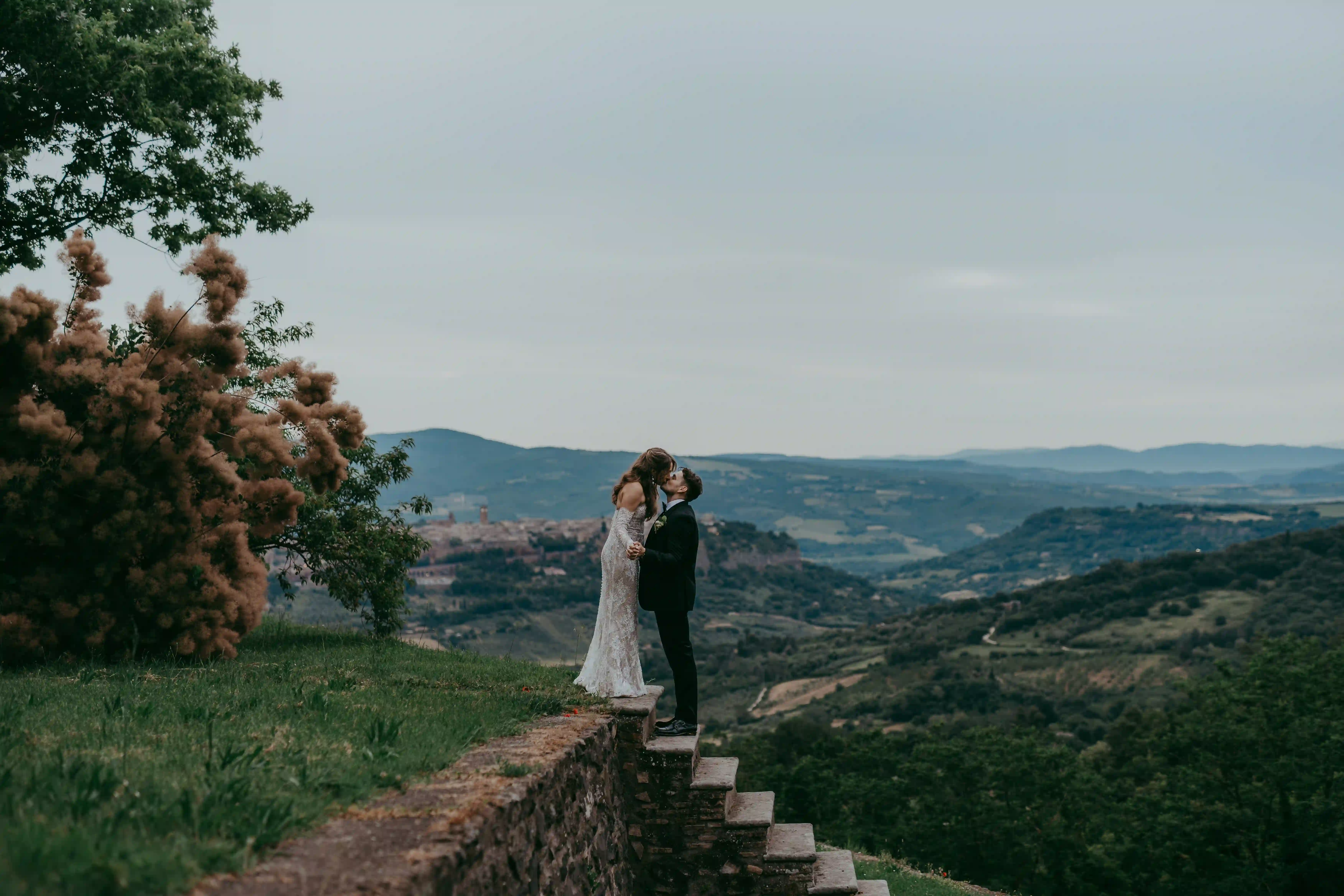
There is no objectively better venue than another. There is the right one for your story. But there are some questions I ask myself every time I visit a venue for the first time, and that I advise you to ask yourselves too.
Where does the light fall in the afternoon? Villas facing west or south-west offer frontal sunsets on the main facades — spectacular but often technically complicated for portraits. East-facing villas give the best results in the morning hours and allow side sunsets, with that golden, soft light you are looking for.
Is there depth in the venue? The best locations are those that offer different planes — an internal courtyard, a terraced garden, a cellar, a tower, a vineyard in the back. The variety of environments in the same day allows for a rich and non-monotonous visual narrative.
Is there a "secret" space? In almost every historic location in Umbria there is a corner that is not shown in the brochures — a niche in the boundary wall, an old stone portal, a path among the olive trees. These are the places I always look for during the site inspection, because that's where the most beautiful shots are often found.
Among the venues I have worked with, Villa Torre Collevento in Orvieto has always struck me for that 16th-century tower that dominates the landscape — there is a time, around 5:30 PM in spring, when the light transforms it into something cinematic. SPAO Borgo San Pietro in Allerona is one of the few locations in the world where you can photograph an entire village as if it were yours — and in fact, for that weekend, it is. The Castello di Montignano in Massa Martana offers a medieval stone that in backlight becomes pure poetry.
How I move during the day
My approach to weddings is born from photojournalism: observing without interfering, looking for the truth in spontaneous gestures. But this does not mean being invisible — it means being in the right place at the right time, which requires meticulous preparation.
The morning is dedicated to details — the shoes resting on the windowsill, the bouquet on the bed, the bride's hands in her mother's. These are moments of authentic intimacy that cannot be built, only waited for.
I experience the ceremony as an observer: I move among the guests, I look for faces rather than poses, I photograph those who look rather than those who are looked at. The reactions, the tears, the muffled laughs in the second row — that is where the soul of a wedding is often hidden.
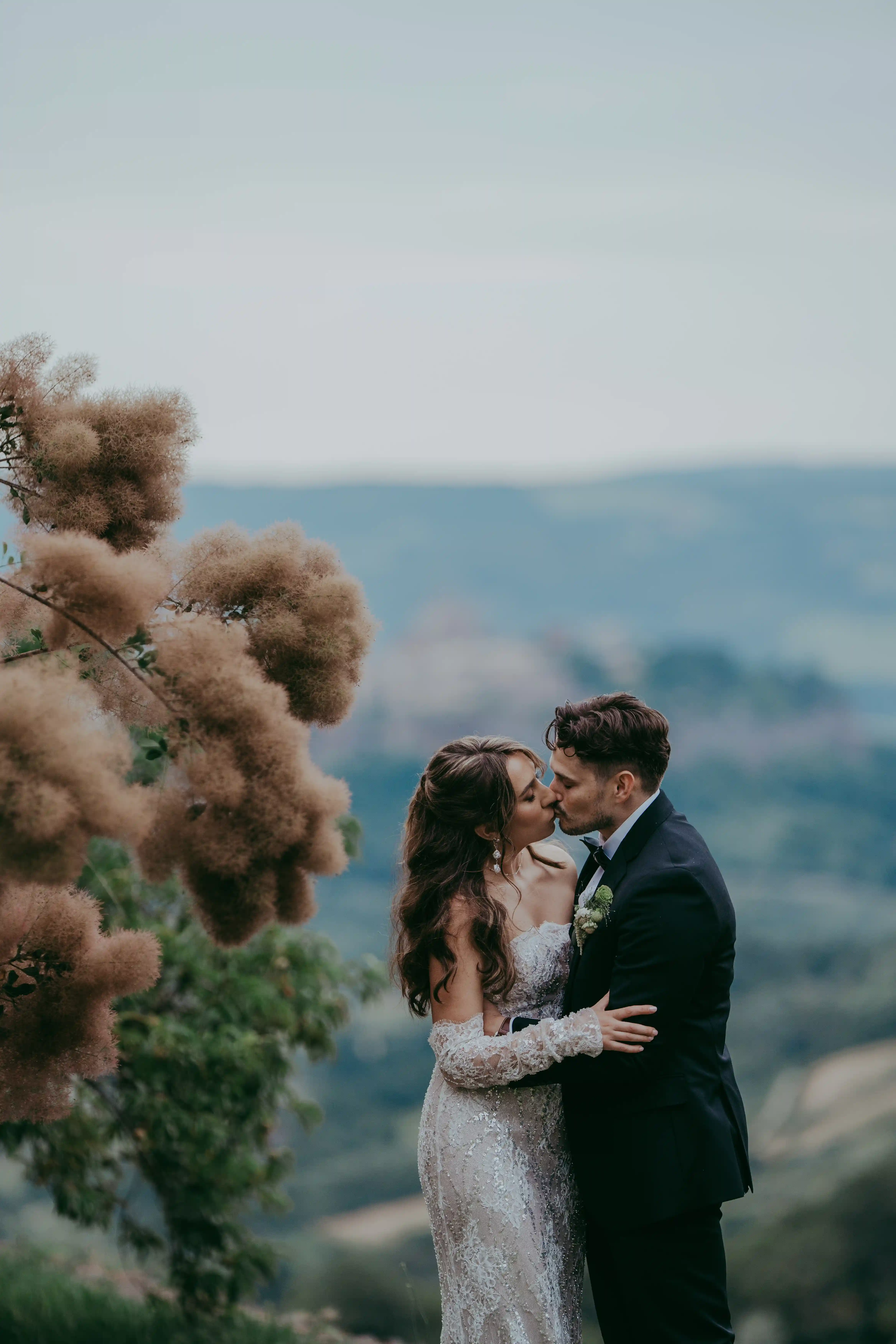
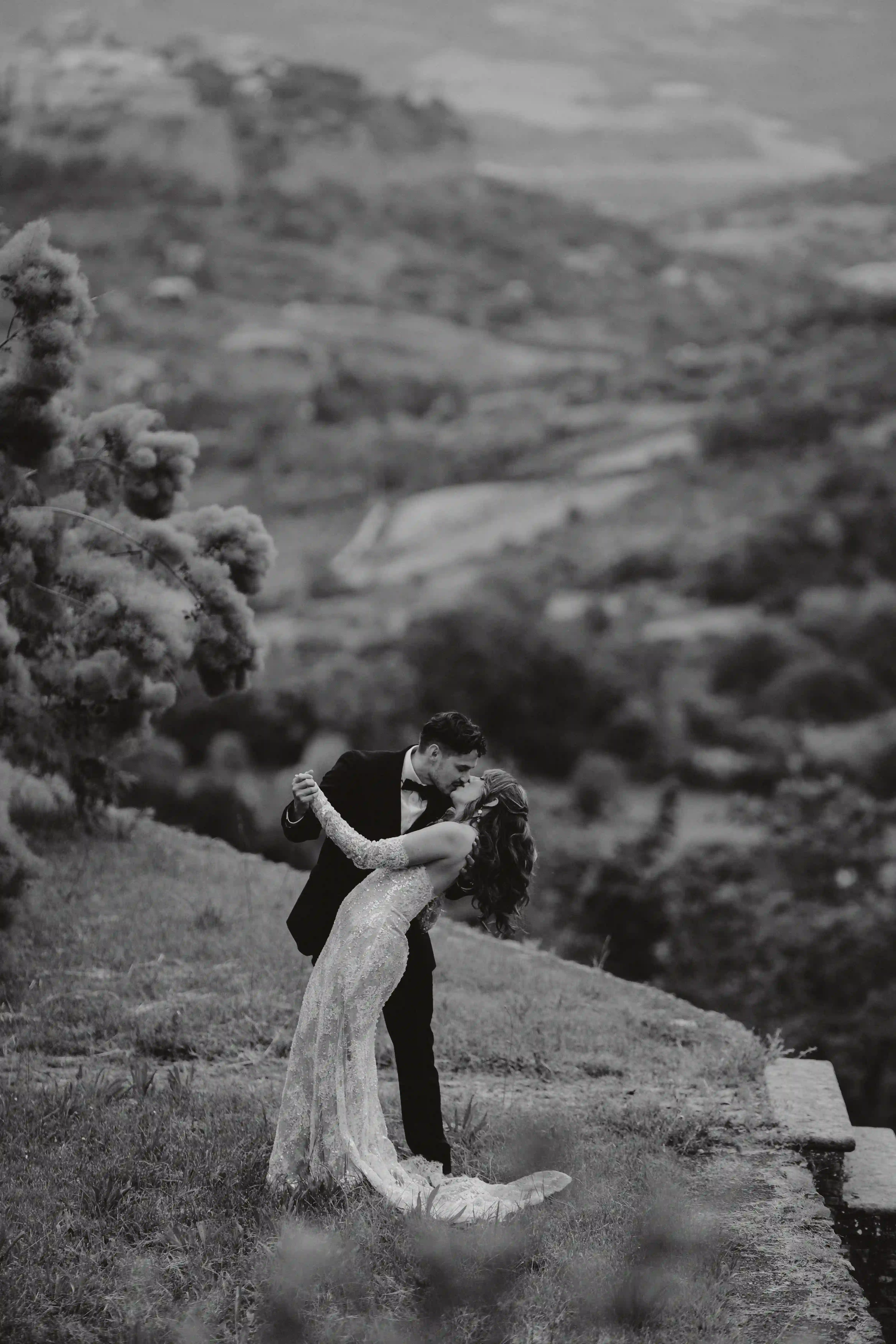
I usually reserve the time for couple portraits in the late afternoon, when the light is just right. It lasts twenty, thirty minutes at most — I don't want it to become a photo session separate from the wedding. I prefer a natural walk, a pause in the day, something you truly experience while I narrate it.
Logistics: some practical points
For foreign couples who choose Umbria for a destination wedding, some practical aspects deserve attention.
Accessibility: Umbria can be reached from Rome Fiumicino airport in about two hours by car, and from Florence in an hour and a half. For guests arriving from outside Italy, it is advisable to organize private transfers or clearly indicate car rental options — public transport in rural Umbrian areas is limited.
The civil ceremony for foreign couples: Legally marrying in Italy requires a series of specific documents, which vary according to nationality. Some venues like SPAO Borgo San Pietro are authorized for official civil ceremonies on site — a not insignificant advantage. For those who prefer to celebrate the marriage legally in their own country and experience a symbolic ceremony in Umbria, the options are more flexible and the bureaucracy much simpler.
Vendor seasonality: The best Umbrian wedding planners, florists, and caterers get booked well in advance, especially for May, June, and September. Those planning less than a year in advance risk finding their preferred vendors already occupied.
Why choose a photographer who knows this land
I wrote it in the article dedicated to destination weddings in Italy, and it's worth repeating here: the difference between a photographer who knows Umbria from the inside and one who arrives for the first time on the wedding day is not a question of talent. It is a question of knowledge of the territory.
I know where that curve on the edge of the hill is from which Orvieto looks like a postcard at 6:15 PM on a Saturday in May. I know which cellar of the Castello di Montignano has that light of stone and shadow that needs nothing else. I know that certain medieval villages have narrow alleys where the afternoon light filters through the high walls creating something that cannot be sought, it must be known.
I have been doing this for thirteen years. I have photographed weddings all over Italy — Tuscany, Amalfi Coast, Lake Como, Venice, Abruzzo — but Umbria is the land where I have my roots, and it shows in the photographs.
Frequently asked questions
What is the best time to get married in Umbria?
May-June and September-October for the light and the climate. Avoid August if you can — the heat is intense and the midday light is technically difficult.
Better a private villa or a medieval village?
It depends on the size of the wedding and what you are looking for. A private villa offers intimacy and total control. A village like SPAO offers an immersive experience for your guests that is unmatched.
How much time to dedicate to couple portraits?
I recommend twenty-thirty minutes, in the late afternoon. It is enough to get beautiful shots without taking too much time away from the celebration.
Is a local wedding planner necessary?
For a destination wedding with international guests, a wedding planner with experience in Umbria is a precious investment, not a luxury. They know the vendors, speak the language, and manage the unexpected.
If you are thinking about Umbria for your wedding and want to understand how this land can become the perfect frame for your story, write to me. I will be happy to tell you what I have seen over these years, and to figure out together how to tell yours.
Tell me your story